Archive for year 2010
Causes of Inflation
Sep 14th
MJMFoodie overview:
1) Monetary Inflation
Watch the first part of this video until 1 minute 30 seconds in (you can watch the rest for a historical example of inflation in the US, but this is not essential to our understanding at this point)
2) Demand Pull and Cost Push Inflation
Introducing Demand
Sep 13th
 EXCEL spreadhseet to explore / predict how a demand ‘curve’ might work.
MJMFoodie video introducing demand:
Slideshow to prompt discussion / thought around the different variables that might move the demand curve. [IB students should know how this relates to the concept of ceteris paribus (look it up) and that changes in these variables are breaking the ceteris paribus assumption. IGCSE students need not worry too much about this.]
Link to original MS Powerpoint here.
If you need to review this, see the video on determinants of demand by jodiecongirl
These changes cause the entire demand curve to shift either to the left or the right.
MJMFoodie video on change in demand versus change in quantity demanded
 Check the difference between “movements along" and “shifts of” the demand curve by exploring these interactive examples:
Changes to the Demand Curve at www.joehoy.com
You need to be really clear that demand is different from quantity demanded. This interactive tutorial by www.reffonomics.com should emphasise this even more:
The Difference Between Quantity Demanded and Demand
Also, jodiecongirl gives an excellent summary on changes in demand and shifts of the demand curve:
Once you think you have understood the concepts introduced above, here are some activities to attempt on line to check and consolidate your understanding.
 Economics Interactive Tutorial by Sam Baker at the University of South Carolina
 Visit this animation and explore it to answer the following questions:
http://www.bized.co.uk/learn/economics/markets/mechanism/interactive/demand1.swf
The diagram shows the amount consumers would like to purchase at a price of £5 (32) What happens in the following cases?
- Price rises to 8
- Price rises to 9
- Price falls to 3
- Price falls to 1
Explain why people may react in the way you have observed.
[Activity taken from http://www.bized.co.uk/learn/economics/markets/mechanism/interactive/part1.htm]
Markets
Sep 13th
What is a market?
View this slideshow to prompt discussion / thought about what the phrase ‘market’ can mean in Economics:
MS Powerpoint version of above: http://opengecko.com/resources/economics/markets/Markets.ppt
MJMFoodie introduces the concept of markets and explains the importance of the price mechanism (but does not yet explain how that actually works … that comes later ..,):
We now need to understand the structure of the market. We can say that there are different types of market which lie somewhere along a spectrum of market structures. There are two theoretical extremes to this spectrum (perfect competition and monopoly).
Again, a useful instructional video by MJMFoodie should provide guidance here:
Now see if you can apply your understanding from the above to the images in this slideshow:
MS Powerpoint version of above: http://opengecko.com/resources/economics/markets/Market%20Structure.ppt
The new ‘Think You Know’ Video?
Sep 12th
Following a theme introduced by Karl Fisch’s Think You Know video, this video produced by the New Brunswick Department of Education on 21st Century Education is professionally made, eye-catching stuff. According to the blurb on You Tube:
This video was produced by the New Brunswick Department of Education to stimulate discussion among educators and other stakeholders in public education in the province of New Brunswick. The 21st Century presents unique challenges for education worldwide. In order to keep pace with global change we must focus on 21st Century Skills and public education must adapt to keep students engaged


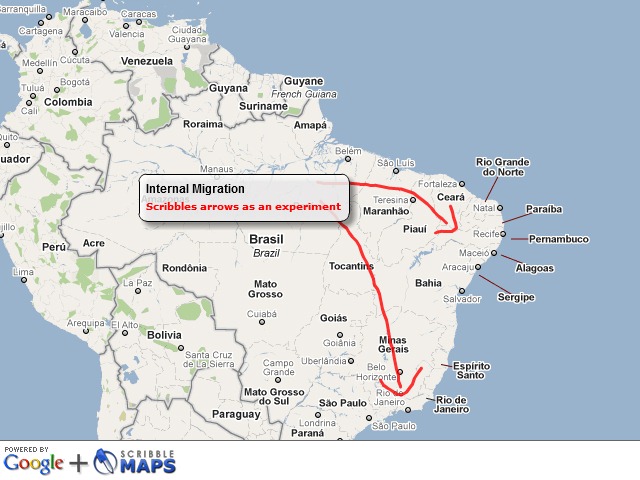
Scribble Maps
Sep 9th
This site is good, especially for those who have an interactive whiteboard, or for students with access to computers. A kind of DIY GIS / map sketching thing …
… just click on the x on the info panel that pops up when you arrive on the site and explore, using the drawing tool bar at the top. The fact that your scribbles on maps can be saved has all kinds of potential too: http://www.scribblemaps.com/.
The Circular Flow Of Income
Sep 9th
 To view an excellent introductory animation to introduce the concept of the circular flow of income, visit this page from the excellent Macroeconomics, Manfred Gärtner, Resources For Students site. A large copy of the same flash file is here.
 A couple of youtube videos should also help explain this model.
First the long one:
Source: lousycracker
And now a shorter video:
Source: BrynJonesOnline
Source: jodiecongirl – best suited to A-Level or IB students
Video: Circular Flow of Income – Macroeconomics [pajholden – best suited to A-Level or IB students]
Once you think you’ve begun to understand it, you can explore an interactive circular flow for yourself, also from the above mentioned Manfred Gärtner site. Click here.
 S-Cool website gives quite a detailed explanation, best suited to A-Level or IB students here.
Twitter Updates for 2010-09-09
Sep 9th
- Incredible images of the recent earthquake at Christchurch, New Zealand – would make a good #geography case-study http://j.mp/biWiNg #
Powered by Twitter Tools
Twitter Updates for 2010-09-08
Sep 8th
- RT @HoppingFun: @olliebray cool #Geography site: Google + Flickr mashup Click on site to see photos from there, zoom in. http://bit.ly/59xwj #
- > @worldmapper: 50 blogs for Geography geeks: http://j.mp/cgAhyl #
Powered by Twitter Tools
Twitter Updates for 2010-09-07
Sep 7th
- Useful snapshot views of various world data sets (eg. development) some data a bit dated though. http://bit.ly/c7iLbe #Economics #Geography #
Powered by Twitter Tools