Archive for year 2010
A) LEDC Urban Land Use Zones and B) Squatter Settlements – their Causes, Problems and Solutions
May 10th
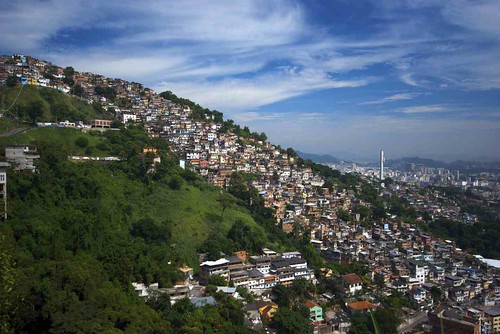
[Source: flickr kevin.j Some rights reserved]
The IGCSE Geography syllabus requires that you can do the following related things:
A) Land Use Zones
1) Describe and give reasons for the characteristics of land use zones of urban areas in LEDCs.
2) Identify the differences in the patterns of urban structures in cities of LEDCs and MEDCs.
B) Squatter Settlements
3) Describe the problems of squatter settlements in LEDCs, their causes and possible solutions.
4) You should make reference to selected examples to illustrate suggested solutions to overcome the problems of squatter settlements (in other words know case studies).
Suggested activity: create a Google Document (or Google presentation if you prefer) to cover the above points under suitable headings.
Resources:
a) Land Use Zones
http://www.bbc.co.uk/schools/gcsebitesize/geography/settlement/urbanmod_ledcrev1.shtml
http://www.bbc.co.uk/schools/gcsebitesize/geography/settlement/urbanmod_ledcrev2.shtml
http://www.s-cool.co.uk/gcse/geography/settlements/urban-morphology.html#urban-models-for-ledcs
Your text book
b) Squatter Settlements (Brazilian focus)
http://www.sln.org.uk/geography/geoweb/blowmedown/shanty05.swf
http://www.geography.learnontheinternet.co.uk/gcse/settlement.html#ledcs
http://www.s-cool.co.uk/gcse/geography/settlements/urbanisation.html#shanty-towns-in-ledcs
http://www.bbc.co.uk/schools/gcsebitesize/geography/settlement/urbanmod_ledcrev3.shtml
http://www.bbc.co.uk/schools/gcsebitesize/geography/settlement/urbanmod_ledcrev4.shtml
http://www.macalester.edu/courses/geog61/chad/thefavel.htm
Opengecko Google Revision Document – Rio de Janeiro
Your text book
Slides 5 to 15 of the following:
London Docklands Case Study
Apr 21st
Here is an excellent video summary of changes over time in the London Docklands, courtesy of BBC’s Learning Zone.
Use these resources to build up case-study material for the decline and regeneration of the London Docklands in East London, UK.
General Information on the Inner City:
geobytesgcse.blogspot.com on the inner city
rchambers/GeoBytes on the Inner City
Information on London Docklands:
rchambers/GeoBytes on the London Docklands
geobytesgcse.blogspot.com on the London Docklands
lddc-history.org.uk on the London Docklands
lddc-history.org.uk on the Isle of Dogs
Some of the slides on this presentation are very useful:
Regeneration Presentation from museumoflondon.org.uk
Think you have a good understanding of what happened? Try this interactive quiz:
Site and Situation and Ordnance Survey Maps
Mar 11th
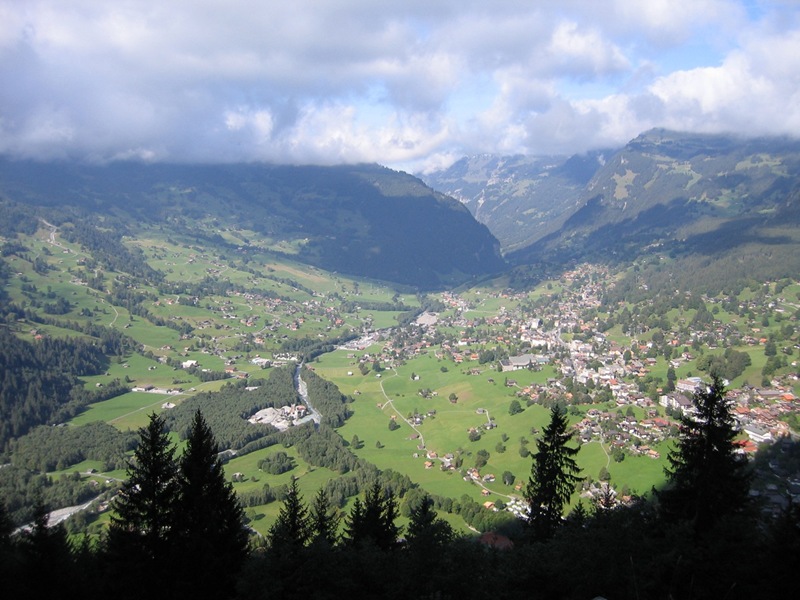
Image source: opengecko.com
The site and situation of a settlement are really important to understanding (a) why the settlement was located in a particular place in the first place and (b) whether or not the settlement was likely to grow over time.
You need to understand:
- the difference between the terms "site" and "situation"
- different factors affecting the site and situation of a place (usually, we think about the needs of the original settlers. In many parts of the world, we have to rewind many hundreds of years, and think about what people would have been looking out for when they decided to build a small settlement somewhere).
- how to recognise these factors through a map such as an ordnance survey map commonly used in the United Kingdom
First check your understanding by visiting these very useful web pages:
Settlement – Site and Situation at GeoBytesGCSE
GCSE Bitesize – Settlement Site and Situation
Geography GCSE: Settlements Site and situation – S-Cool
For some real examples, you could explore the middle ‘Site and Situation button’ here:
http://www.mrdgeography.com/Urban%20Geo/Urban_Geo.swf
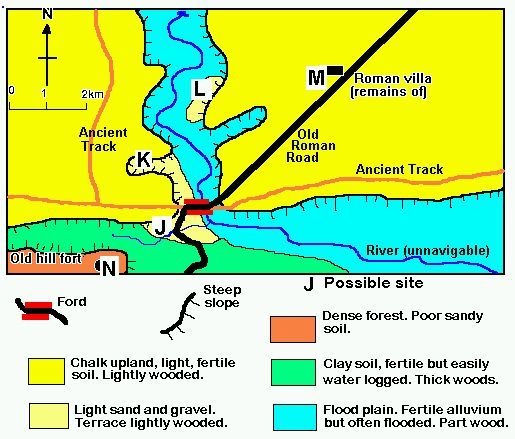
For a quick activity to check your understanding you could try evaluating the following sites on this imaginary map in terms of which might be better than others for locating a settlement. Make sure you can give reasons why.
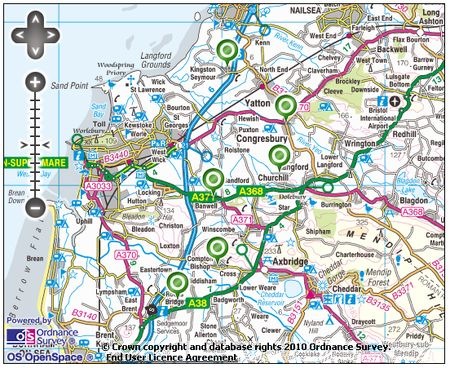
Now you could select a map (such as an OS map). A good example can be found in this area below, comparing six villages (near to the green dots). Click on the image below to take you to an interactive OS map on a separate page. Note that you can zoom in and out:
To help you evaluate different settlements’ site and situation factors, you can use the following framework. Note that this includes reference to ‘morphology’ which you may or may not have covered yet. If you have not covered settlement morphology (shape) yet, you can leave this out.
A direct link to this document for print (and save as pdf) is here:
Table to evaluate 6 settlements’ Site and Situation
When completing this table you should include as much information as possible. If the settlement does well under any heading, say why and give map evidence (including grid references). If you think the settlement would not score so highly on any row, again say why, and give good reasons. Finally, you may like to view the same area using a Google map with satellite view. Again, you can zoom in and out:
View Weston-Super-Mare Environs Site Situation Settlement in a larger map
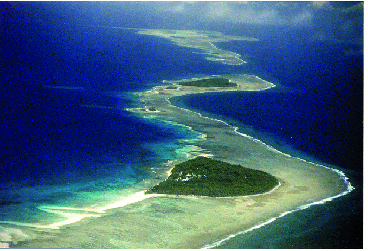
Coral Reefs
Feb 24th
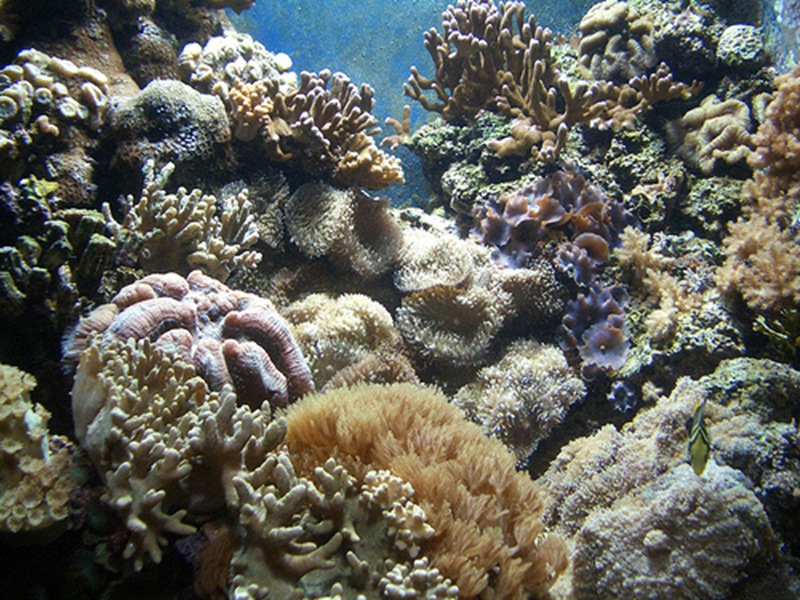
Photo from flickr.com by Androfire (Some rights reserved)
From the IGCSE syllabus:
Describe the conditions required for the development of
coral reefs.Describe
• fringing and barrier reefs
• atolls
Describe the location of coral reefs, and the necessary conditions for their development:
http://library.thinkquest.org/C0125204/about/coraldist.swf
http://www.mbgnet.net/salt/coral/where.htm
http://www.seaworld.org/infobooks/coral/habdiscr.html
http://www.starfish.ch/reef/reef.html
http://www.marinebio.net/marinescience/04benthon/crform.htm
Understand and make brief notes on how coral reefs operate as an ecosystem:
Make notes on the different types of reef and how they are formed. Sketch diagrams to add to your explanations. Make sure you focus on fringing reefs, barrier reefs and atolls. For each, you should be able to give a named example. :
http://www.jochemnet.de/fiu/OCB3043_39.html
http://www.starfish.ch/reef/reef.html
http://en.wikipedia.org/wiki/Atoll
Fringing reef:
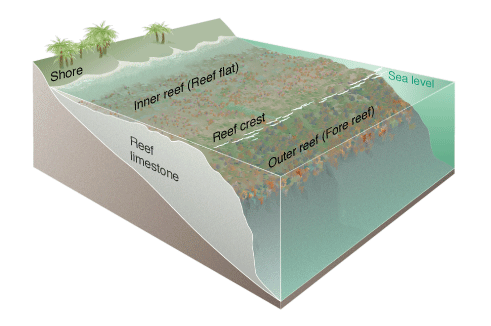
Source: http://pubs.usgs.gov/fs/2002/fs025-02/
Atolls:
Source: http://commons.wikimedia.org/wiki/File:Ulithi-atoll.gif
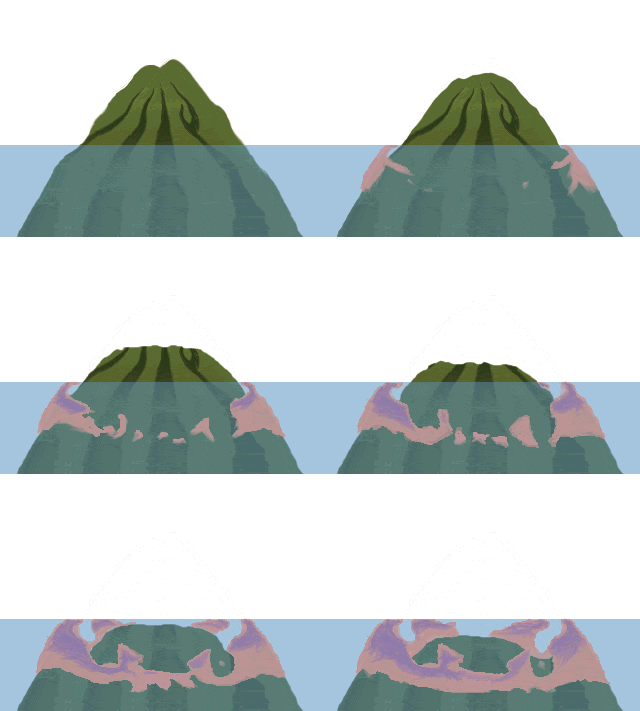
Source: http://en.wikipedia.org/wiki/File:Coral_atoll_formation_animation.gif
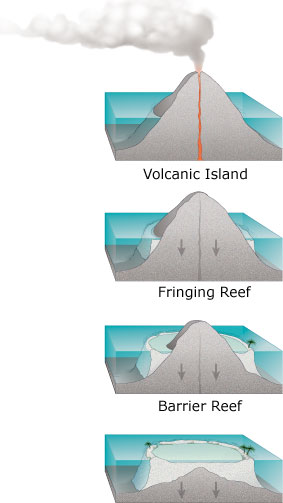
Source: http://pubs.usgs.gov/fs/2002/fs025-02/
Describe and explain the human threats posed to coral reefs, and try to give named examples:
http://www.mbgnet.net/salt/coral/threats.htm
http://www.marinebio.net/marinescience/04benthon/crform.htm
Research some of the possible solutions to these threats.
http://www.nature.org/joinanddonate/rescuereef/explore/help.html
Sand Dune Processes
Feb 22nd
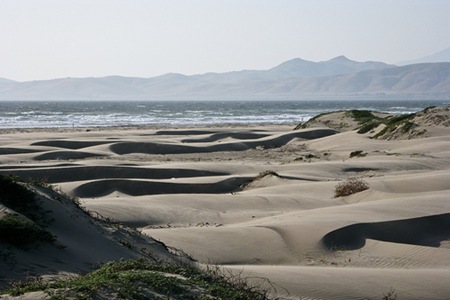
Photo from flickr.com by mikebaird [Some rights reserved]
The IGCSE Syllabus requires us to understand this:
Describe and explain the landforms associated with these processes. You should study the following coastal landforms:
□ coastal sand dunes
The action of wind in shaping coastal sand dunes should also be understood.
Here are four good websites to help you achieve this understanding:
Coastal Sand Dunes on Offwell Woodland and Wildlife Trust
BBC Scotland Higher Bitesize on Sand Dunes
Uses of the Amazon Rainforest
Feb 1st
How are people using the rainforests?
You need to choose one of these groups who are using the Amazon rainforest in some way:
a) Amazon indians (e.g. Kayapo Indians)
b) Miners of Iron Ore (e.g. at the Carajas Iron Ore Mine)
c) New Settlers (also known as colonists or colinistas tehse are farmers who were given land by the government this happened a lot ion the 1980s)
d) Cattle Ranchers
e) Conservation Groups
f) The Government responsible for Transport (e.g. the Trans-Amazonian Highway)
g) Loggers
h) The Government responsible for Energy (e.g. new Hydro Electric Power Stations)
Your mission is to create a truly awesome slideshow with an absolute maximum of three slides and a minuimum of one slide to explain:
1) How these people are using the rainforest and why they use it this way.
2) Examples of where these people are using the rainforest and for how long – maps / satellite images would obviously help
2) Difficulties this might have caused
3) Possible solutions for the future
The slideshow has to be very visual with images, facts and figures – you are using the slideshow software to its full potential. We are not interested in text heavy information. This will be shown at the start of a lesson. You can include hyperlinks to websites if people want to learn more.
Obviously you will need to research this thoroughly, and the internet is an obvious resource.
Output, Costs, Revenue and Profit
Feb 1st

[Image: nDevilTV  Some rights reserved]
The Cambridge IGCSE syllabus requires us to have a good understanding of the following:
We have seen useful videos on YouTube before, particularly MJMFoodie’s very visual explanations (which are often aimed at higher stages of education, such as IB). One of her useful videos (on fixed and variable costs) is here:
Another useful video by MJMFoodie gives an introduction to the topic and explains the idea of the law of diminishing returns.
A great idea for a learning activity to really understand this topic is for you to work with one other person towards producing your own video, MJMFoodie style. It should be simple – create a PowerPoint (or similar) with images. These images can be your own that you have drawn on the computer, scanned into the computer, or other images produced by other people. It is obviously preferable to use images that are not copyrighted, so some good places to visit for non-copyright images are here:
http://www.everystockphoto.com/
http://search.creativecommons.org/
As you assemble your slideshow, make sure you are working on your script to go with each slide. Later on you will want to record your voiceover while playing the slideshow. In that case, planning the video out is essential and you should start with your partner by story-boarding the video.
Your video should summarise this theory on costs, revenue and profit as outlined in the syllabus above. It should summarise it in a highly visual and accessible way. Your video should ideally last somewhere between 5 and 10 minutes.
A good starting point is to consult the relevant chapter in the text book you are using. A good text book is this one, which introduces the idea using Sue’s Teddy Bear Firm.
 |
Economics: A Complete Course for IGCSE and O Level: Endorsed by University of Cambridge International Examinations |
Other simple summaries of aspects of this topic are found here:
Tutor2U – Simple Overview of Output, Fixed Costs and Variable Costs
Tutor2U – Simple Overview of Revenue, Costs and Profit
Tutor2U – Simple Overview of Average Costs and the Scale Of Production